THE CRYSTALLOGRAPHY OF MINERALS
DIAMOND
Understanding the differences between traditional White Diamonds, Salt & Pepper Diamonds, Black Diamonds, and Desert Diamonds helps you choose a stone that reflects your values and aesthetic.
This guide explains what makes each type unique and which is best for your needs.

DIAMOND
Mineral: Diamond
Chemical Composition: Pure Carbon
Crystal System: Cubic (Isometric)
Birthstone: April
Mohs Hardness: 10 (the hardest natural substance on Earth)
In mythology, pure and colourless stones with exceptional brilliance such as the Diamond were naturally brought into connection with the moon. It was understood that all gems associated with the moon partook of its enigmatic character, protecting the wearer from demons and malevolent spirits by illuminating the witching hour of the night.
Although Diamonds have been beloved as talismans and amulets for centuries, historically it was coloured gemstones such as Sapphires, Emeralds and Rubies that were the fashionable choice for wedding and engagement jewellery. Diamonds featured only as small accents rather than large centre stones.
In the 1940s, the De Beers Group created the marketing campaign that turned the Diamond into the most popular choice of gemstone for engagement and wedding jewellery. Prior to this, sales of Diamonds were actually in decline. Shortly after the success of this campaign, the globally accepted standard for describing Diamonds, known as the 4C's, was created by the Gemological Institute of America (GIA).
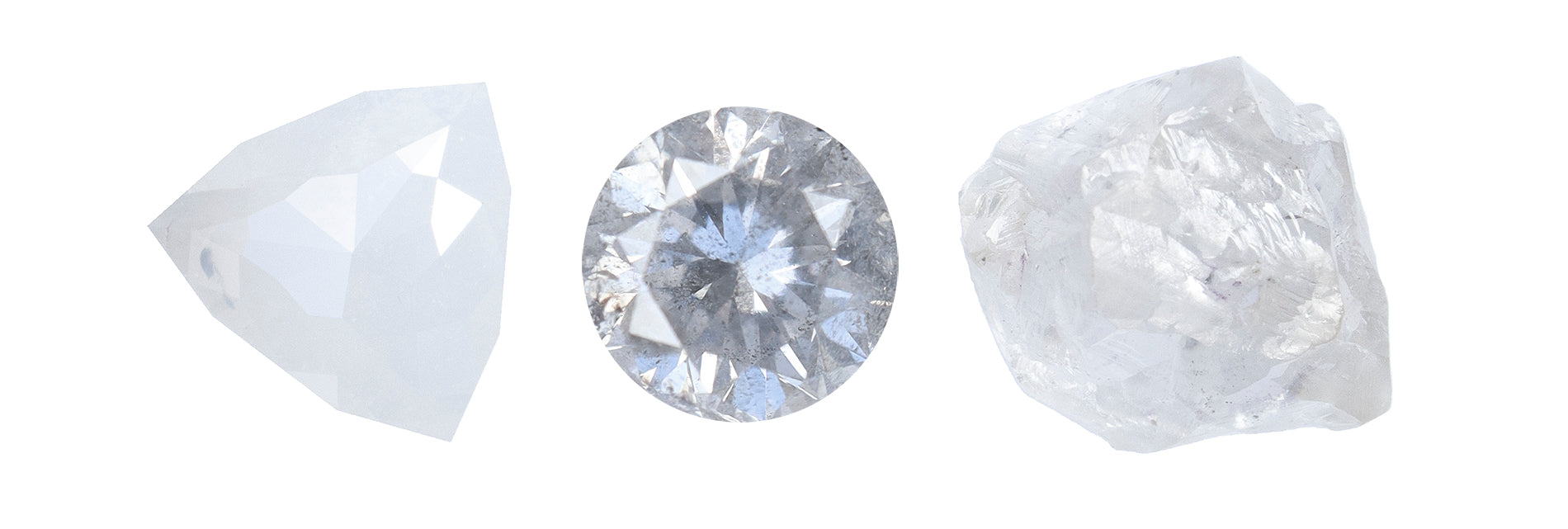
THE 4C's: TRADITIONAL DIAMOND GRADING
Cut: Refers to how well a diamond's facets interact with light. The quality of the cut determines a diamond's brilliance and sparkle (scintillation).
Clarity: Measures internal inclusions and external blemishes. The GIA clarity scale ranges from Flawless (no inclusions visible under 10x magnification) to Included (inclusions visible to the naked eye).
Carat: Is the unit of weight for diamonds. One carat equals 0.2 grams. Larger diamonds are rarer and therefore more valuable per carat.
Colour: In traditional diamonds is graded from D (colourless) to Z (light yellow or brown). For diamonds in the normal range, value is based on the absence of colour.
NON-TRADITIONAL DIAMONDS
Colourless Diamonds have dominated the engagement ring market for decades, prized for their optical clarity and light performance. But in the last 25 years, a new genre of Diamonds have begun to rise in popularity. With a brazen disregard for the invented rules of Diamond desirability originally created by De Beers and clarified by the GIA, a new generation of consumers are in control of the market by seeking out unconventional stones for their wedding and engagement jewellery.
As a result, the affordability of these distinctive diamonds remains attainable.
SALT & PEPPER DIAMONDS
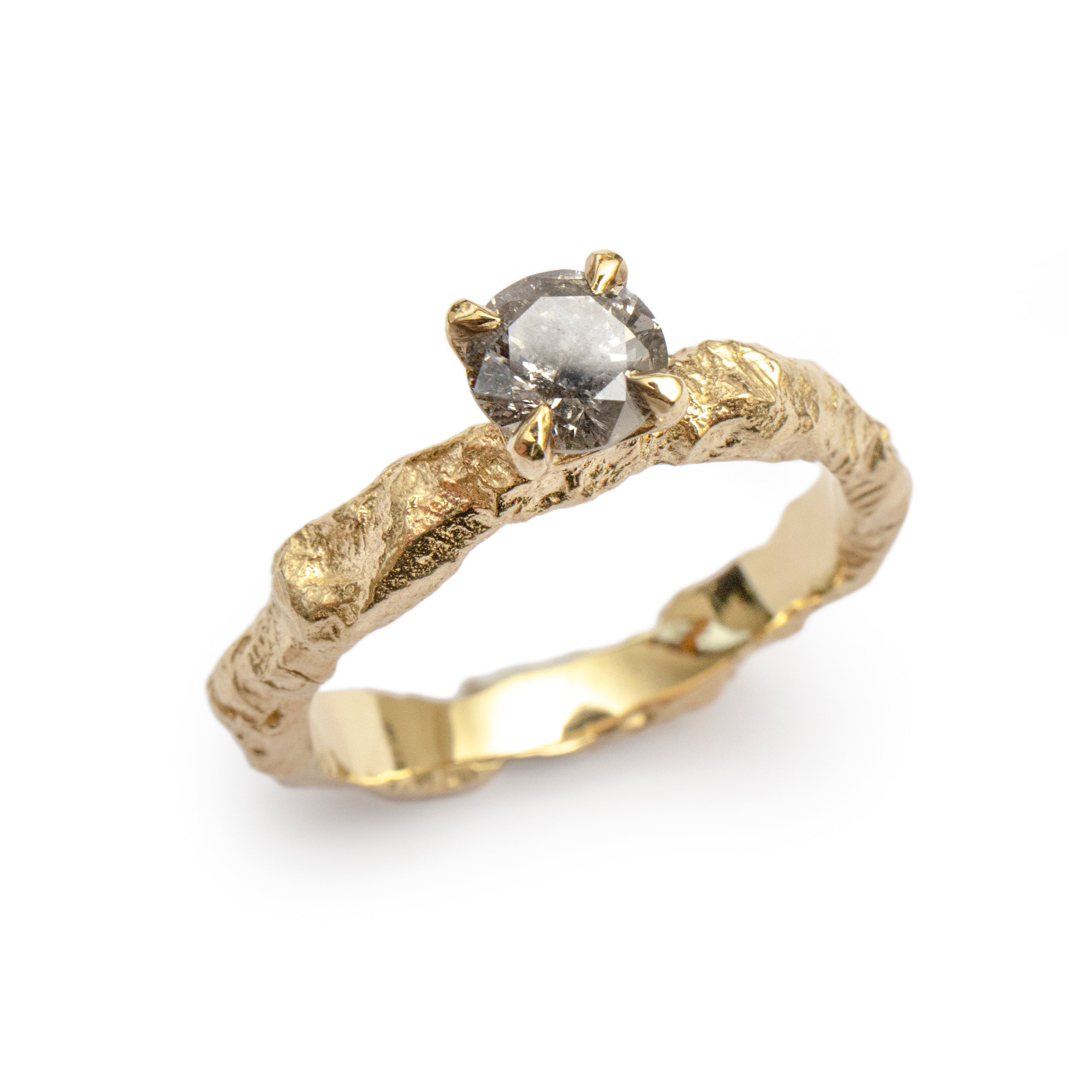
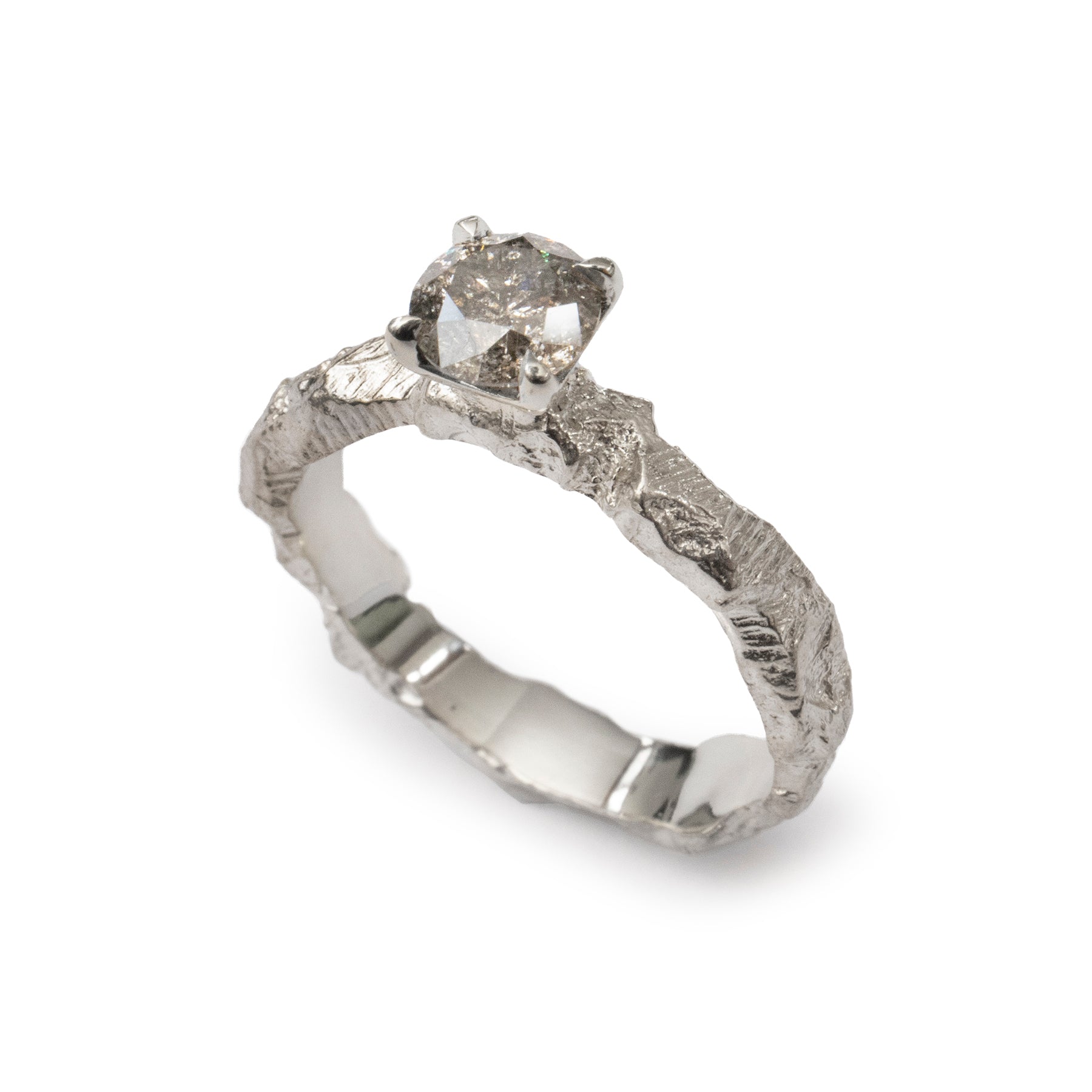
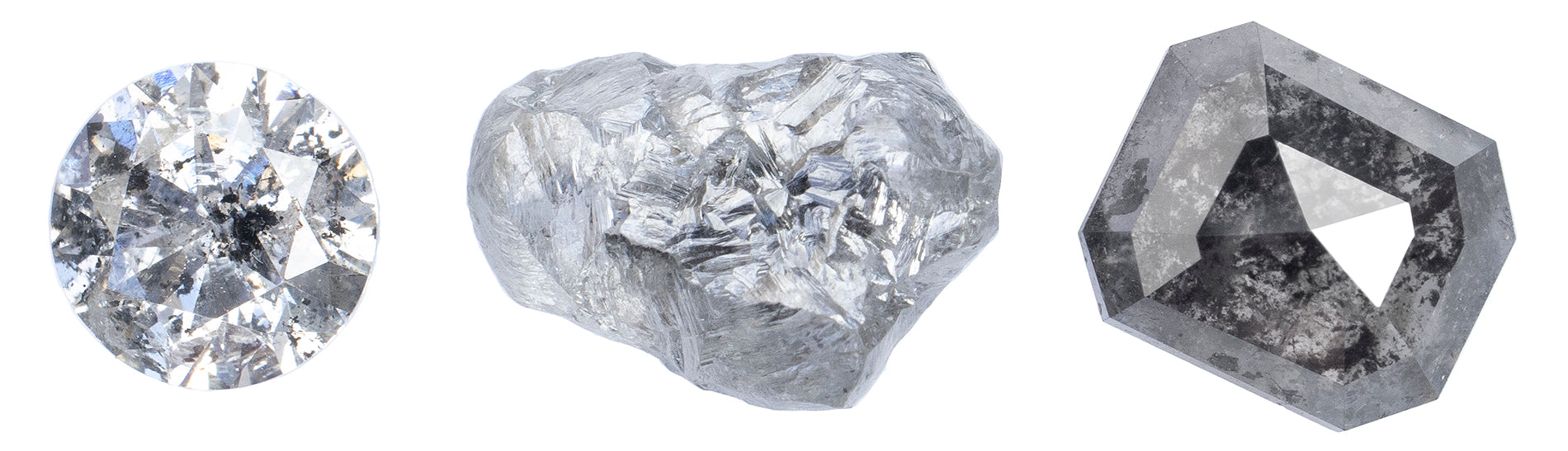
Stones with translucency that feature visible inclusions have come to be known as Salt & Pepper Diamonds. Where an ideal, colourless Diamond is identical to every other ideal colourless Diamond, the mixture of black, white, brown, and sometimes coloured inclusions makes each Salt & Pepper Diamond truly unique.
Salt & Pepper Diamonds range from near-white with scattered pepper inclusions to densely patterned stones with complex internal landscapes. They can be very translucent, semi-translucent, or even opaque and milky in tone.
Best for:
- Those seeking one-of-a-kind engagement rings
- Couples who value character over traditional perfection
- Larger centre stones within budget
- Rings with organic, textural metalwork
Considerations:
- More affordable than traditional Diamonds of the same carat weight
- Each stone is completely unique
- Heavier inclusions create natural stress points (though still very durable at hardness 10)
- Best set in protective settings like bezels or secure prongs
RUSTIC BROWN, CINNAMON & DESERT DIAMONDS
Within the spectrum of included Diamonds, stones with warm earth tones have become particularly sought after for their organic beauty.
Look out for terms like Rustic Brown, Cinnamon and Desert Diamonds to describe a spectrum of included Champagne, Brown, Orange and Red Diamonds. These stones capture warm, earthy palettes—from pale sand to deep terracotta—and often feature organic patterns of inclusions that add distinctive character.
Best for:
- Those drawn to warm, earthy colour palettes
- Rings with geological or natural aesthetic
- Unique centre stones with depth and movement
- Pairing with Yellow Gold or Rose Gold
Considerations:
- Offer the same durability as all Diamonds (hardness 10)
- Extremely affordable compared to colourless Diamonds
- Each stone tells its own visual story through colour and inclusion patterns
BLACK DIAMONDS
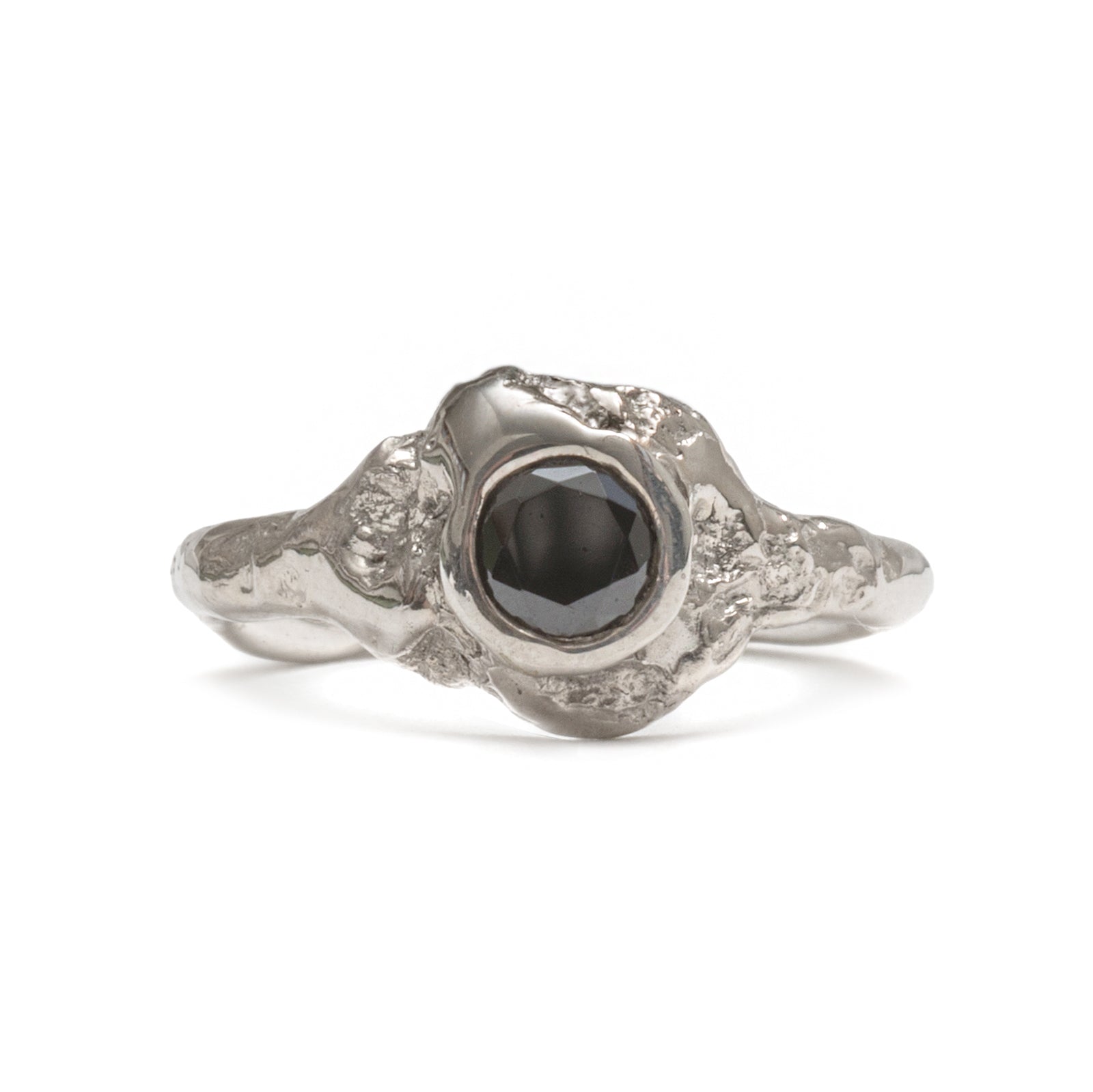
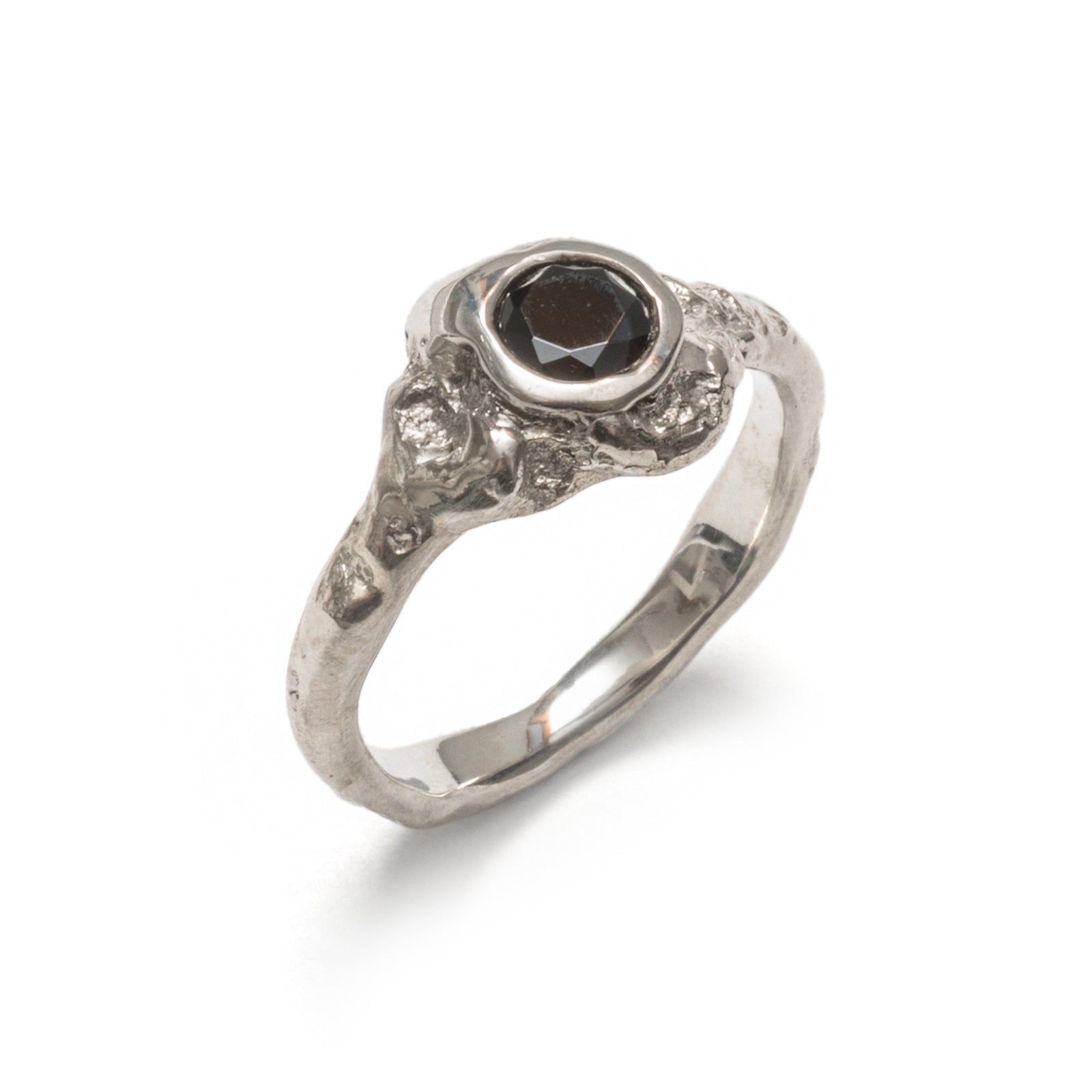
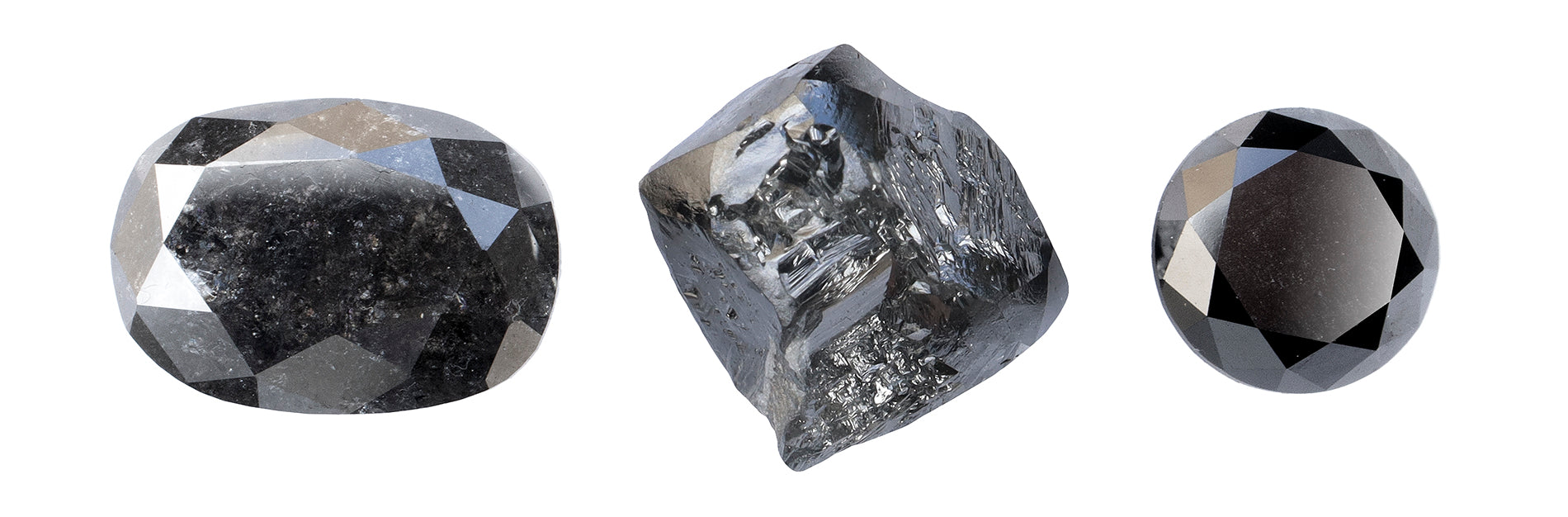
For Black Diamonds, it is clarity rather than colour that creates their appearance. Most natural Black Diamonds get their deep opacity from large quantities or clouds of mineral inclusions that extend throughout the stone.
Natural Black Diamonds may be heat-treated to enhance their overall appearance. Treated Black Diamonds are typically completely opaque with a high lustre that gives them an almost metallic quality. Heat treatment is a common and acceptable gemmological practice.
Best for:
- Dramatic, high-contrast jewellery
- Those seeking bold, unconventional aesthetic
- Pairing with White Gold or Sterling Silver for maximum contrast
- Statement engagement rings
Considerations:
- More affordable than traditional diamonds
- Heat treatment is common
- Almost or completely opaque with metallic lustre
- Extremely durable for everyday wear
FANCY COLOURED DIAMONDS
Champagne, Chocolate, Cognac, Vivid Yellow—these terms describe diamonds with fancy natural colour but traditional clarity. Unlike Salt & Pepper or Black Diamonds where inclusions create the appearance, these stones derive their hue from trace elements or structural variations within the crystal itself.
Fancy Grey Diamonds contain hydrogen as an "impurity" element, creating their silvery-grey appearance. These stones range from light silver to deep charcoal, offering sophisticated alternatives to traditional White Diamonds.
Fancy White Diamonds display a milky white colour and sometimes show beautiful opalescent flashes. These ethereal stones have a soft, dreamy quality entirely different from the icy brilliance of colourless Diamonds.
Some fancy coloured diamonds are genuinely rare. Pink Diamonds from the famous Argyle mine in Western Australia, which produced over 90% of the world's Pink Diamonds, are exceptionally rare. The mine closed in November 2020 when the supply had been exhausted.
Best for:
- Those seeking a more subtle departure from traditional diamonds
- Creating a dynamic juxtaposition against rugged geological textures
- Soft, romantic aesthetic
- Great for all metal pairings but particularly effervescent in cool-toned metal
LAB-GROWN DIAMONDS
Lab-Grown Diamonds (also called laboratory-created, cultured, or synthetic Diamonds) are produced in controlled laboratory environments using advanced technological processes that replicate the conditions under which natural Diamonds form in the Earth's mantle.
Chemical and Physical Properties:
Lab-Grown Diamonds are chemically, physically, and optically identical to natural Diamonds. They are pure carbon with the same crystal structure, hardness (10 on the Mohs scale), and light performance. They cannot be distinguished from natural Diamonds without specialised equipment.
Current Technology:
The technology for creating Lab-Grown Diamonds continues to advance rapidly. Whilst traditionally Lab-Grown Diamonds were produced primarily in colourless and near-colourless grades, the range of options is expanding. Lab-Grown Fancy Coloured Diamonds are increasingly available, and recently even Salt & Pepper Lab-Grown Diamonds have entered the market, offering included character stones at accessible price points.
Considerations:
Lab-Grown Diamonds are typically significantly less expensive than natural Diamonds of equivalent size and quality. For those working within budget constraints or who prefer laboratory-created stones for environmental or ethical reasons, they offer identical durability and beauty to natural Diamonds.
The resale value of Lab-Grown Diamonds is lower than natural Diamonds, as there is no shortage of supply. This may or may not be relevant depending on your perspective on engagement ring jewellery as heirloom or investment.
My approach:
Whilst I hold a personal affinity for natural, earth-formed minerals, I work with what feels right for each client's values and vision, without preference either way.
WHY CHOOSE DIAMONDS FOR ENGAGEMENT RINGS
Despite our collective knowledge of the dubious marketing and mining practices that have shrouded Diamonds with mistrust over the years, this stone continues to captivate. When cut with precision, Diamonds refract light and sparkle in a truly enchanting way.
As the hardest substance on earth, Diamonds are the very best gemstones for wedding and engagement ring jewellery. For longevity and durability in pieces meant to be worn every day for a lifetime, there is no better choice.
Choosing what's right for you:
Traditional colourless Diamonds offer timeless brilliance and exceptional light performance. For those drawn to classic beauty and the captivating sparkle of a well-cut White Diamond, they remain an excellent choice.
Non-traditional Diamonds—Salt & Pepper Diamonds, Black Diamonds, Rustic Brown Diamonds, Cinnamon Diamonds, and Desert Diamonds—offer all the durability of traditional Diamonds whilst celebrating unique character, organic beauty, and visual distinctiveness. Each stone tells its own story through its inclusions and colouration, making it truly one-of-a-kind, and they're significantly more affordable than traditional Diamonds of the same size.
DIAMOND COMPARISON CHART
| Type | Appearance | Best For | Price Point |
|---|---|---|---|
| Traditional White | Colourless, high clarity | Those wanting classic brilliance | $$$$ |
| Salt & Pepper | Translucent with inclusions | Unique, one-of-a-kind stones | $$ |
| Rustic/Cinnamon | Warm brown tones | Earthy, geological aesthetic | $$ |
| Desert | Brown/orange/Champagne | Warm-toned metals | $$ |
| Black | Opaque, metallic lustre | High-contrast, dramatic | $$ |
| Fancy Grey | Silver to charcoal | Sophisticated, subtle | $$$ |
| Fancy White | Milky, opalescent | Soft, romantic | $$$ |
| Lab-Grown | Identical to natural | Budget-conscious, ethical priority | $ |
FREQUENTLY ASKED QUESTIONS ABOUT DIAMONDS
What are Salt & Pepper Diamonds?
Salt & Pepper Diamonds are natural Diamonds with visible inclusions of black, white, grey and sometimes brown minerals. These inclusions create unique internal patterns, making each stone completely distinctive. Unlike traditional Diamonds which are valued for clarity, Salt & Pepper Diamonds celebrate their inclusions as part of their beauty.
Are Salt & Pepper Diamonds real Diamonds?
es, absolutely. Salt & Pepper Diamonds are natural Diamonds with the same chemical composition (pure carbon) and hardness (10 on the Mohs scale) as traditional colourless Diamonds. The difference is that they contain visible inclusions rather than being internally flawless.
Are Black Diamonds treated?
Most Black Diamonds available for jewellery are heat-treated to enhance their colour and create the deep, opaque black appearance. This is a standard and accepted practice in the jewellery industry. Treatment should always be disclosed by your jeweller.
What are Desert Diamonds?
Terms like Desert Diamonds describe a spectrum of included Champagne, Brown, Orange and Red Diamonds. These warm-toned stones capture earth colours reminiscent of desert landscapes and offer a distinctive alternative to traditional White Diamonds.
Are non-traditional Diamonds suitable for engagement rings?
Yes. All Diamonds—traditional and non-traditional—have a Mohs hardness of 10, making them exceptionally durable for everyday wear. Whilst heavily included Diamonds (Salt & Pepper, Black, Desert) may be slightly more brittle than flawless stones, they are still excellent choices for engagement rings with proper care and secure settings.
How much do Salt & Pepper Diamonds cost compared to traditional Diamonds?
Salt & Pepper Diamonds, Black Diamonds, and Desert Diamonds are typically significantly more affordable than traditional White Diamonds of the same carat weight, as they don't meet conventional clarity standards. This makes them an excellent choice for those seeking larger centre stones within a budget.
Will the inclusions in my Diamond cause it to break?
Inclusions do create natural stress points, but Diamonds are so hard that breakage is extremely rare with normal wear. The key is ensuring your stone is set securely in a protective setting designed for its specific characteristics. I design all settings with the stone's unique properties in mind.
Can I use Salt & Pepper Diamonds in any ring setting?
Yes, though bezel settings or settings with protective prongs are recommended for heavily included stones. I design all settings with the specific stone's characteristics in mind to ensure both beauty and security.
What's the difference between natural and Lab-Grown Diamonds?
Lab-Grown Diamonds have identical chemical composition and hardness to natural Diamonds but are created in controlled laboratory conditions. I work primarily with natural Diamonds, including non-traditional varieties that cannot be replicated in labs. Lab-Grown Diamonds can be sourced on request for specific projects.
Can you source Lab-Grown Diamonds for my ring?
Yes, I can source Lab-Grown Diamonds for bespoke commissions. The technology has expanded significantly in recent years, with options now including Fancy Coloured and even Salt & Pepper Lab-Grown Diamonds.
CARING FOR YOUR DIAMONDS
Although diamonds are the hardest mineral, they still require care to maintain their beauty.
Cleaning: Clean diamond jewellery regularly with warm water and mild soap. Use a soft brush to gently remove dirt from settings and behind stones.
Storage: Store diamond jewellery separately to prevent stones from scratching other pieces.
Professional Check: Have settings checked annually by a jeweller to ensure stones remain secure.
Note for Included Diamonds: Salt & Pepper Diamonds, Black Diamonds, and Desert Diamonds with heavy inclusions should be treated with slightly more care than flawless stones, as inclusions can create natural stress points within the crystal. Avoid ultrasonic devices for cleaning, and avoid general impact and ensure settings are secure regularly.